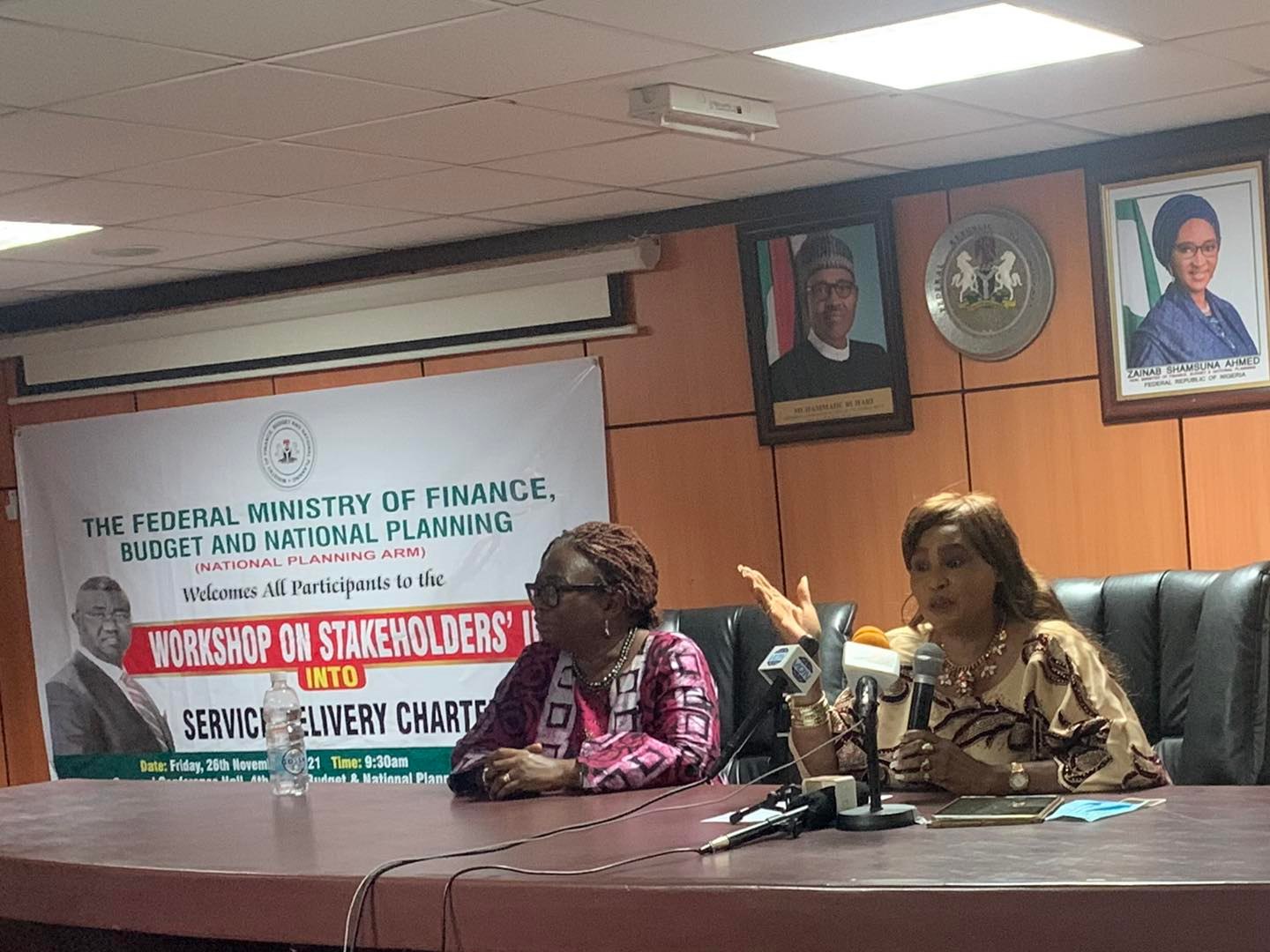
The Federal Ministry of Finance, Budget and National Planning (Budget and National Planning Arm) is in the process of reviewing and updating its Service Delivery Charter for the purpose of effectively delivering on its mandates and services to Nigerians and stakeholders.

Director, Reform Coordination and Service Improvement in the Ministry of Budget and National Planning, Dr Ann Nzegwu, disclosed in her opening remarks at a one-day workshop on stakeholders’ input into the document in Abuja, that the Ministry was set to soon unfold an updated Service Delivery Charter.

Dr Nzegwu, who represented the Minister of State for Budget and National Planning, Prince Clem Ikanade Agba, on the occasion, said the Ministry had made sure it had a functional Service Deliver Charter.

According to her: “we had our first one developed when we were National Planning Commission and at the turn of launching it, we became Ministry of Budget and National Planning, and as we embarked on trying to modify that, another merger came that made us Ministry of Finance, Budget and National Planning; so we went back again to the drawing table.”

The Director also explained that the service charter “contains the mandates which guide the functioning of an institution” and had to be properly crafted and followed to avoid creating a vacuum in the smooth running of the ministry.

Nzegwu said that National Planning being the think tank of the government, related with every ministry in the country, and that informed the structure in the ministry which was different from that of other MDAs

“We have departments that anchor every sector of the economy; so, as a result of that, it’s very important that those stakeholders from other ministries including clients and customers that we interact with have the opportunity to see what we are saying.

“We will deliver to them and at the same time have the opportunity to give us their input of what they expect of us so that when all this is done, the document will be launched,” she said.

She informed the participants that the Minister of State, Budget and National Planning, Prince Clem Ikanade Agba, would present, when completed the validated document to the public.

Dr Francisca Odeka, the resource expert that worked on the document introduced the draft document of the Service Delivery Charter to the participants.

She expressed her appreciation to the senior management of the Ministry, alongside Dr Nzegwu, for the opportunity to prepare the draft Charter.

She said she hoped that the document would be of benefit to the organization.

Tell us more about Technology Global?

Technology Global Services Limited was created out of a need to resolve technical problems in the printing sector, the company over the years has been at a cutting edge because of the heavy investment in factory trained Nigeria engineers ensuring that every customer’s investment is protected by making sure the equipment runs always. The promise of a near zero downtime has helped increase patronage as we believe that a customer’s job is to ensure they put printing jobs on the machine while we ensure that those machines keep running.  We love to sell tested and proven print technology so we represent topline equipment manufacturer, we also love to see businesses grow, thanks to our ever-evolving non- traditional approach; from helping customer to conceptualize, to procurement, deployment, installation, operator training, commissioning and then super after sales support. We can say we are a dependable partner to our ever-growing list of happy customers as we ensure being always flexible and easy to collaborate with and constantly improving and transferring knowledge. Recently we brought home all we have learnt globally and started to manufacture made in Nigeria printing machines, our long-standing dream is now empowering some young people, we hope to keep getting better so that we can start exporting made in Nigeria printing equipment

As an IT firm do you think that your eCommerce site is sustainable?

We are not really an IT firm but sure we use technology to solve printing problems, and we have encouraged especially our textile printing customers to embrace eCommerce, some of them are selling their quality prints to their own customers abroad, the ecommerce site is helping them earn forex so in my opinion there is no other way to define sustainability.

Do you think that Nigerian market is ripe for full eCommerce because of logistic challenges?

One of the positives that COVID 19 pandemic brought was an embracing of eCommerce, supply chain disruption, restriction of movement made people see that we had to use other methods to get our goods to us, recall that there was a ban on bike transportation popularly called “okada” and a host of this operators embraced dispatch riding, this also prompted easier logistics, like any other sector that people see a need for, we will continue to  experience growth and evolution of ecommerce and the logistics that will come with it

What are the sales support system that you have in place?

Sales support refers to variety of functions that helps sales executives focus on selling and closing deals. Recall that our industry is capital intensive so a proper knowledge of what we sell and its application is our first focus, we ensure sales people are well grounded and can display a flavor of their knowledge about the subject matter. In house training, cases studies during brain storming sessions are for us a way of life, there is a level of knowledge that is required before you even step out to engage a client. Then we arm them with series of sales tools like Videos, return on investment calculators, cost per print analysis, presentations that compare apples with apples etc.

Fake parts are things that are rampant in the market, how are you dealing with this?

We are the dealer for known suppliers in Nigeria, we represent Agfa for computer to plate systems, Xeikon for industrial digital label and document presses, and when we talk entry level label printers, we represent Afinia, screen printers are covered as we represent M&R, for textile printers we have products from Polyprint (for DTG and DTF), and Dgen (for roll to roll direct to textile), the flexible packaging world we are handy with Esko products and AVT for their inspection systems. As a company we stock major spare parts for this equipment, so it will be safe to say we are actually solving the problem of substandard spare parts.

What are the challenges that you face in the business?

Challenges are part of business; we constantly evolve the business with extreme focus and creativity. Like every business we also face challenges of founder dependence, burnout and fatigue, money management, selling the vision to staff and stakeholders, staff retention, managing diversification and so on.

What are Nigerians to expect from you this last quarter?

We did position for this quarter, when the pandemic came, it did come with so much uncertainty and confusion but luckily we were part of the first to snap out, we had an online general meeting first with the management team then all staff and we decided that we will bring all we have learnt globally home and apply them locally, we agreed that we will use engineering to solve difficult problems, we took on electricity problem and locally produced solar power for our office, so today we can provide alternative power supply for small printing equipment, then we produced VESA coined out of Vitalis Ebiziem and Sulemon Aniyera, our top super engineers whose conceptualized and designed the exposure unit for screen printers that expose using sunlight today, with the small equipment they can buy an affordable equipment powered using their “I better pass my neighbor” generator any time of the day even when it’s raining or when the sunshine has disappeared at night.

While we were still at it, a client, another screen printer asked if we could manufacture a mesh stretching unit and a month after, we had it fully fabricated and delivered, this then motivated us to produce a one platen multicolor screen-printing equipment. We are also working on a solution that will help resolve one major problem that printers are currently battling with, we won’t like to let the cat off this leather bag yet. But all we can say is as we start this last quarter there are many solutions awaiting the printing community, our plea is for them to start buying made in Nigeria printing equipment as this is the only way we can get better at what we do.

How did you cope with Covid 19 pandemic and what do you have in place that is making you to adapt to the current realities?

As I said earlier, we snapped out of the shock and faced our reality, in our thought we saw the good, the bad and the ugly that the pandemic came with and decided to refocus based on the good, like, the change in trend and lifestyle and then started massive education for all our customers to refocus, for instance supply chain problem caused a scarcity and then hike in prices of our chemistry plates, we advised customer to switch to thermal plates. Our believe is that difficult times won’t be forever but we all need to show empathy and stay reasonable with each other till the difficult

What advise do you have for startups?

I have a video posted by Print TV on YouTube titled 10 mistakes people make when starting a printing business, I will just like to reiterate the points I made there as it applies really to any business startup;

1.      Having a clearly defined mission 2.      Having the adequate budget 3.      Choosing the right equipment/ tools 4.      Do you have support? 5.      Specialize, don’t try to do everything 6.      Invest on trained man power 7.      Build a strong network 8.      Put the right process in place 9.      Build your staying power as you go through the learning curve 10.    Have a proper exit plan

We are the dealer for known suppliers in Nigeria, we represent Agfa for computer to plate systems, Xeikon for industrial digital label and document presses, and when we talk entry level label printers, we represent Afinia, screen printers are covered as we represent M&R, for textile printers we have products from Polyprint (for DTG and DTF), and Dgen (for roll to roll direct to textile), the flexible packaging world we are handy with Esko products and AVT for their inspection systems. As a company we stock major spare parts for this equipment, so it will be safe to say we are actually solving the problem of substandard spare parts.

The status of the Nigerian Communications Commission as a flagship public sector brand, got another fillip, yesterday, as Engr. Abraham Oshadami, a Deputy Director at the Commission and Head of Spectrum Database Management, was declared winner of the CIO OF THE YEAR AWARD for Ministries, Departments and Agencies (MDAs), a nomenclature for one of the awards to the public sector group.


The Award, conferred on Oshadami at Oriental Hotel Lagos on 26th November, 2021, “celebrates and honours successful and outstanding individuals and organisations that are using digital innovation and information technology systems to bring about real growth and transformation to businesses”.  Oshadami was Head of NCC’s Information Technology Department since 2016 until 1st September, 2021 when he was reassigned to Spectrum Administration Department in keeping with Commission’s strategic realignment.


Organised annually by Edniesal Consulting Limited – an enterprise governance and corporate services firm – the Chief Information Officer (CIO) award is given in both public and private sector categories to Nigerian or African citizens or persons eligible to work in Nigeria. Such persons/executives must be serving in the capacity of senior Information Technology Executives, Chief Technology Officers, Chief Digital Officers or Chief Information Officers, and their entities must have been registered and doing business for at least two years by July 31 when entries are submitted for assessment annually.


The CIO Award by Edniesal Consulting Limited is the “Largest CIO Awards in Africa”. The awards are in different categories, namely: MDAs, banking, telecoms, insurance, technology, energy and so on.

Participants, who are usually persons primarily responsible for IT operations in the organisations they work, officially submit applications,Wow which are reviewed by a project team. The reviews are forwarded to an interim jury which undertakes the first major assessment. The Interim Jury then presents three top nominees in each category to a Grand Jury for assessment. The grand jury conducts assessment and presents a list of final winners to an Independent Assurance Team for a final review and submission of report.


This is the process Engr. Oshadami’s application passed through and he’s adjudged the best CIO in all Ministries, Departments and Agencies of government as the best of the public sector executives supervising Information Technology operations where they work. The NCC website, one of the items in the purview of the IT Department of the NCC which Oshadami supervised for 5 years, is been serially referred to as a forest of resources, due to the volume and quality of resources therein and its reliability as a source of credible information to journalists, other communication professionals and several close and far-flung stakeholders seeking information about Nigeria’s telecom sector.
In 2018, the Nigerian Communications Commission’s website was adjudged the Best Website of the Year in the MDAs’ Category by the Nigerian Online Merit Awards (NIOMA). The award particularly noted NCC website as the most “interactive, current, relevant and error-free” among all MDA websites assessed.


Same year, the NCC also received the best awards for use of social media to disseminate information and to promote visibility on Facebook, Twitter, Instagram, LinkedIn, and YouTube to promote visibility and interaction. The social media handles are solely in the purview of the Public Affairs Department of the Commission, while the Information Technology Department and the Public Affairs Department collaborate in administering some aspects of the Commission’s website.


Oshadami, a first class graduate of electrical and electronics engineering from the University of Ibadan, has worked in different capacities and mostly in Management positions since September 2004 when he joined the Nigerian Communications Commission.

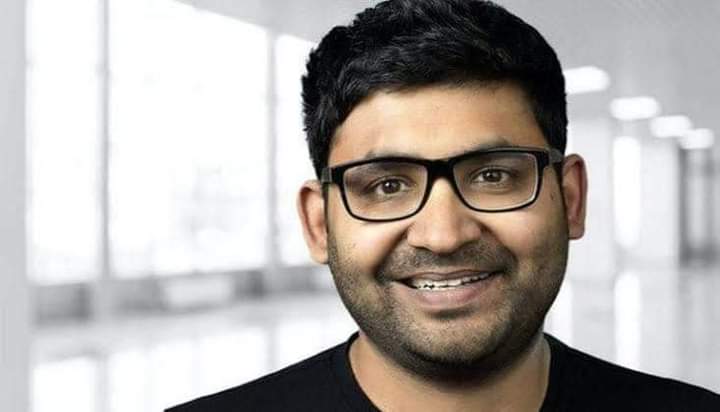
“As Twitter’s CE0, Jack Dorsey steps down from his position, the running of the business is now in the hands of Indian-American, Parag Agrawal.

Below are five things to know about the new Twitter CEO:

  1. Before his current appointment, Agrawal was Twitter’s chief technical officer.
  2. He joined the company in 2011.
  3. He has served as the chief technology officer since October 2017, where he was responsible for the network’s technical strategy.
  4. Before joining Twitter, he did research internships at AT&T, Microsoft and Yahoo.
  5. Agrawal holds a PhD in computer science from Stanford University and a bachelor’s degree in computer science and engineering from the Indian Institute of Technology in Bombay”

Credit: Ukabuilu chuks

Some philosophers call it chance, some theologians call it blessings, most motivational speakers call it strategic positioning, some pentecostals call it grace, and some traditionalists call it luck.

Whatever you call it, it happens to all of us. Life is not on a straight line and things do not come to us in ways we often expect.

Jay Jay Okocha with all his skillful play never won the African footballer of the year award. Or should we talk about Didier Drogba?

2face despite his voice and songs may never even be nominated for Grammy award not to talk of winning it.

There are people that write better than Chimamanda, but they may never get her opportunities and awards.

While the woman upstairs is praying to be pregnant and have atleast a baby, her neighbour downstairs is going to the hospital to see how she can stop being pregnant.

There are those born into wealth, there are those that made wealth, there are those despite all their intelligence and hard work will not taste what it means to be rich.

Those who have more get more, those who have less, even the little they have is taken away. Davido getting millions from friends just in few days should be an example here.

And here is my take: As long as you have something to offer, give your BEST into it and still carry it at the back of your mind that this life is never on a straight line.

And as you carry that in your mind, don’t forget to SINCERELY do what the bible says in Roman 12:15: “Be happy with those who are happy, weep with those who weep.” It is sign that you have transcended some of these worldly categories and that you are contented.

Have a blessed day friends!

PurestPurity

FacebookTelevision

FR KELVIN UGWU

It is well-known that the Covid-pandemic has forced change in many industries and driven digitalisation at a pace faster than anyone could have anticipated, but it has happened at the cost of robust security and digital authentication.

The ramifications of this could be felt soon as it becomes increasingly difficult to know whether the person on the other end of a digital transaction is legitimate and authenticated.

Juniper Research in its 2020-2025 Digital Identity Market Summary estimates that digital identity apps will exceed 6,2 billion by 2025 from a 2020 base of 1 billion.

South Africa, together with most other countries, is on an aggressive growth path towards digital authentication and digital recognition maturity. Entrepreneur and digital, remote biometric authentication specialist, Lance Fanaroff from the award-winning business, iiDENTIFii, says there have been pros and cons as a result of Covid.

“It would appear that 2020 and 2021 rolled into one, resulting in a very hard 24-month year for the majority of businesses. The Covid-19 pandemic has seemingly also been the tipping point for so many technology-driven change cycles, both good and bad, which has left many businesses in a digital dilemma.”

Having recognised the dire need for remote biometric identity authentication locally, iiDENTIFii has successfully developed globally relevant technology that provides proven biometric liveness, facial verification, and validates data through secure triangulated authentication. This unique approach has seen the company win the MTN Business App of the Year Awards 2021 in the ‘Best Enterprise Solution’ category; and it has also attained Microsoft co-sell Partner status with its biometric digital authentication and automated onboarding solution hosted in Microsoft Azure. The company has also won the 2021 new Microsoft ISV Partner of the Year award.

Fanaroff says that while Covid did accelerate digitalisation across many industries, the speed with which it was implemented led to poor choices, which will be felt in the next two to five years. A key area of concern, according to Fanaroff, is digital recognition and digital authentication solutions. These are widely regarded as critical must-haves coming out of the “24-month year” global pandemic.

Many companies may have implemented inadequate solutions and left their key assets — their data and intellectual property vulnerable and– at risk. 

It is well known that the pandemic forced significant change in many industries, including financial services, telecommunications, health and telemedicine, education, gaming and crypto – all of which hold valuable information that are priceless in the hands of certain individuals. “Covid fast-tracked so many online digital solutions and fuelled a worrisome digital identification threat fire. It is astounding to see the quality and ease with which deep-fake identities have been created. In 2018, comedian Jordan Peele warned many of this phenomenon, and Covid has just made the threat 100 times worse.”

Remote working has amplified the threat, and it is becoming imperative to know who you are really speaking to the other side of the screen. According to Fanaroff the Digital Identity Verification industry, globally,  had seen an investment of almost $2B when 15 scale-up businesses were funded to develop facial recognition solutions: “In 10 months the industry received more funding than in the last seven years. This spike of more than 100 times the funding previously received shows that those on the technology forefront know digital verification is a growing concern and immense opportunity.”

That said, Fanaroff believes that the industry has only addressed the tip of the iceberg. 

The financial services industry is leading the race when looking at digital authentication and digital recognition because regulations require them to have robust systems in place for Know your Customer (KYC) compliance.

He says that what is helping immensely is that although consumers are loathed to trust technology, they have become extremely comfortable taking a selfie. This, together with increased regulation and the POPIA – the Protection of Personal Information Act – will assist greatly in protecting not only the financial institution but also the consumer as well

Cloud growth and adoption has also played a role. Despite a two-year decline, the 2021 growth of cloud is forecast at $74,3 billion and Fanaroff says that this level of cloud availability has undoubtedly had a positive impact on the use of smart tech such as Artificial Intelligence, Machine Learning, and other automation solutions and services: “We have even seen a spike in cloud-related career choices as solutions continue to evolve and require higher levels of skills, while developers view these positions as ones that provide good job security.”

As 2021 speeds to the end, Fanaroff says that the year has been witness to some significant achievements. Massive adoption of more digital technology and a level of comfort with compliance are two of the main positives, while a level of standards setting has also been achieved: “We are seeing a move towards more impressive interoperability and benchmarks are being established with the digital identity authentication and digital recognition space. iiDENTIFii is looking forward to increased collaboration across sectors and even competitors. By working together, the success of cyber-attacks will undoubtedly decrease, and it is simply a mindset change that is acutely needed.” 

Ends


About iiDENTIFii

iiDENTIFii is a world leading remote biometric digital authentication and automated on-boarding technology platform. It fulfils the needs of customer-focused organisations that are required to authenticate and on-board customers. It makes use of a frictionless and non-invasive automated proven process, that meets customer intelligence, risk and compliance goals, as well as ticking all the boxes from a governance and legislative perspective.

https://iidentifii.com/

PICTURE CAPTION: Lance Fanaroff, chief strategy officer, iiDENTIFii.


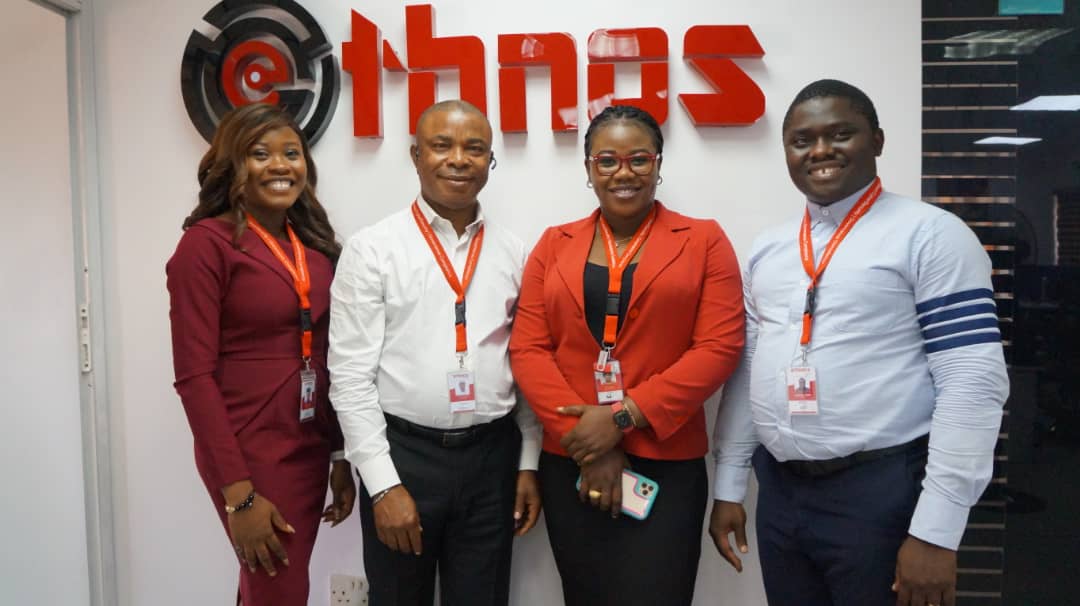
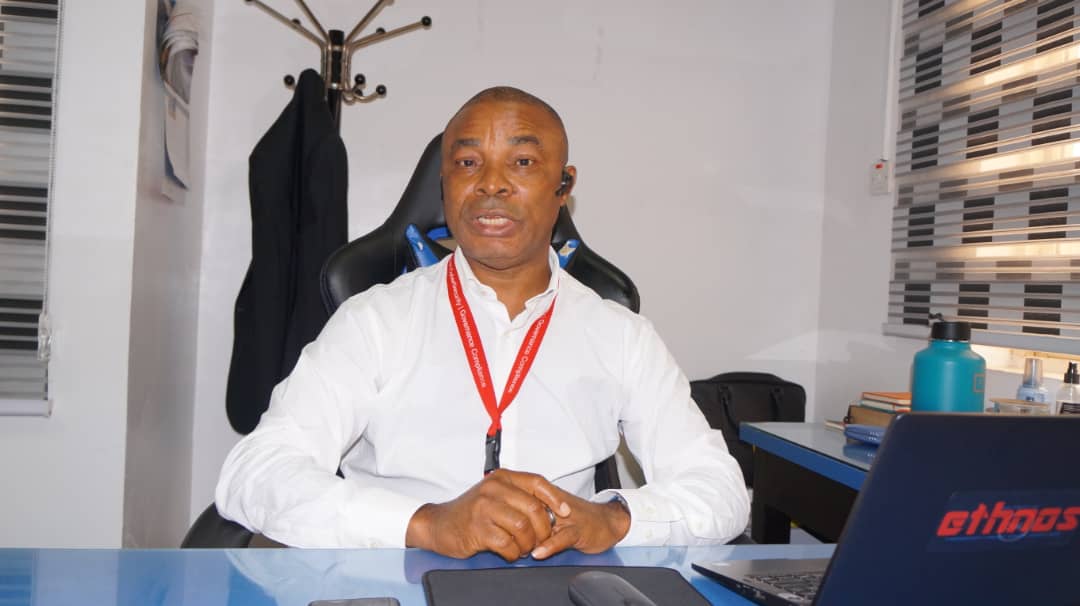
Ethnos IT Security Solutions Limited is celebrating 10 years as an IT Security solution provider. Can we know how it all started?

As a company we were designed to provide security solutions to organisations, businesses and others. As technology keeps improving we came to knowledge that security is the backbone of technology. We can’t talk about technology advancement without thinking of how to secure your business assets and human to human engagements. We, at Ethnos IT Solutions have grown with the growth of technology, Today, technology is looking at artificial intelligence (AI), machine learning, metaverse, digital transformation, Holography and many others. We have grown with these new technologies and also improved in our capacity and skillset to support our customers as they consume these technologies. We have grown our market base, personnel, in terms of global technical engagements we have grown also. That is the journey. Someone said if I survive 5 years it means we would be in business for long and thank God we have survived these 5 years and we are ten today. Ten years has been a good experience for us. We have our ups and downs but we keep evolving.

Are you focused in B2B relationship or B2C relationship as it pertains to cyber security business?

Currently, we have a wealth of experience and we have changed our thinking and vision as a company. What we do now is to solve real problems for organisation and we are not limited in our thinking. We are not limited in any area of cyber security. Companies and organisations are on a journey as it pertains to business and we come in to solve problems for organisations in terms of security. We are no longer at this stage delivering products but solving problems. Some customers we evaluate them, some we train them and improve their cyber hygiene culture, some we deploy technologies to control their touchpoints, some we help on their regulatory compliance and certification journeys. We do firewall, application security, database security or perimeter security. So, we look at businesses and implement threat management and we have platforms that we can plugin your environment and help you control and detect threats from internet exposure to data base etc. We detect and remediate these threats. We also conduct threat hunting and keep checking what criminals will check for, we detect it before the criminals. We specialise in solving problems for customers regardless of what you are doing.

Do you do Penetration and vulnerability testing for companies?

Yes, we always do that for customers, before we implement anything, we first assess your threat and risk level… we do what we call threat assessment. This is the first level we take. Currently, we are conducting vulnerability and assessment testing for most of the stockbrokers as required by the Nigerian Stock Exchange.

What do you think about security breaches in Nigerian banking system?

There is the roadmap from Central Bank for banks on the levels of protections that should be in place. They have gone to define some framework that the banks must have, they are also looking at mobile environment such as mobile applications. If the CBN defines a roadmap, then banks must follow them because they are developed from expert experience and advise. So, banks must follow these guidelines. I’m not aware the Nigerian government has enacted a law that compels every organization to make their breaches public. This is what a responsible government must do. Banks are making huge efforts and investment to protect their data and that of their customers. I do sympathize with them because as they borrow new frameworks and technologies, they sometimes run into difficulties and no organization is breach proof and I know that the banks and CBN aren’t sleeping.

https://ethnos.com.ng

What about independent merchants and those deploying mobile apps?

As of the merchants, I don’t know how much regulatory frameworks are into this area. People are spinning out all kinds of mobile app, depending on what they are offering and these apps collate critical information from people and we do not know how they store and process it. We do not know the level of investment and I do not know how they do their source code analysis etc? We know how much source code analysis cost. The criticality of source code environment determines how strong the app is and criminals are now looking in that direction to launch attacks… there is the need to regulate them because if the apps are vulnerable, the users are in trouble.

Now, what do you think about public sector and what do you think that the government can do?

In business you have to know that there is what is called “focus”. Our focus as a business is to offer solutions to private businesses, it is easier and faster to deal with the organized private sector. Government isn’t an easy client to deal with, we do not want to be distracted while chasing or engaging with government. We know the political side of it and we are apolitical as a firm. If the government wants to engage us, we are open to consultancy but as per chasing government contracts, we are strictly focused on private sector. Although, we are engaging with NITDA as a DPCO (Data Protection Regulator Organization) that has been certified by NITDA. We want the lawmakers to make law on security of critical public infrastructure. There are couple of experts who are speaking to government here. We believe that it will come out positive.

You changed your corporate logo, why the change?

When we started as a company, we wanted to create an identity but as we have come of age, we tweaked our logo a bit to reflect whom we are as of today. The concept of the circle you find in our logo shows a network of our customers. If you look at it clearly it is not broken, we meant here that our customers are safeguarded and we are supplying the livewire they need to grow. We wanted that to reflect in our logo as a problem-solving organization.

What have you learnt this past 10 years as a CEO of an IT firm?

As a Chief Executive Officer of this organization and the leader of this team, I have learnt a lot of things. As a person, I have learnt to create a platform for people to thrive. We recently created an academy where people are recruited and made to know the rudiments of cybersecurity. We created a platform that will have skills available to the young ones and we trained them at no charges. We are building a platform of security experts. We are also a strong and bonded team; we encourage people to try. Opportunities abound in the market and we encourage people to take advantage of them. I also learnt that you just have to put in your best strategically and see where life take you. I enjoy what I do, it is no longer like a work to me but a lifestyle.

How did you gain market acceptance during your early years as an indigenous firm?

Well, it is mindset which has become cultural where Nigerians believe that foreign firms are better but we met some Nigeria who were of different opinion and they gave us a chance and here we are today. The industry has grown today, we were early birds that came to the industry when it was young or green. The security industry has grown so wide and today a lot of people have joined and the industry has grown. What sets us apart is that we do not only provide products but we provide services. We go to companies with questions like; what have you tried and failed? What are your plans for security? what fears do you nurse and your plan? We help organization answer these and even equip the people with skillset. We help organization to optimize their products. These are few of the things that sets us apart. We appreciate those that gave us a chance during the early days. A good number of Nigerian companies died off due to the acceptability of their products where many business owners think that foreign firms are better. Some companies are built from scratch to survive and we are built to stay in business and provide an environment for many others to thrive and grow.

What do we expect from you in future?

Currently, we are running a platform that allows us to conduct detection and response. It is a managed service that is focused on threat hunting. We want to grow that platform and see many organizations cost effectively enjoy security protection. We want to expand our capacity and give people opportunity to express themselves and contribute to protecting national assets. Cyberspace is getting more dangerous today with software everywhere, we have houses, watches, phones and a whole lot that is powered by software and because software is everywhere, it means that risk is everywhere. We want to stay relevant and ensure that these software are protected because they carry critical information from health, flight, defense, education to financial to others.

Today, technology is looking at artificial intelligence (AI), machine learning, metaverse, digital transformation, Holography and many others. We have grown with these new technologies and also improved in our capacity and skillset to support our customers as they consume these technologies. We have grown our market base, personnel, in terms of global technical engagements we have grown also. That is the journey. Someone said if I survive 5 years it means we would be in business for long and thank God we have survived these 5 years and we are ten today. Ten years has been a good experience for us. We have our ups and downs but we keep evolving.

 Sophos, a UK company primarily focused on providing security software in conjunction with TechEconomy.ng has announced December 7, 2021 (11.00 AM WAT) as the date for the webinar on ‘Securing Remote Working’.

Coronavirus has brought remote working to the top of everyone’s mind, with many organizations already enabling or exploring it. 

According to the Velocity Smart Technology Market Research Report 2021, 70% of remote workers said they had experienced IT problems during the pandemic, and 54% had to wait up to three hours for the issue to be resolved.

Meanwhile, CISO’s Benchmark Report 2020, says organizations are struggling to manage remote workers’ use of phones and other mobile devices.

According to the organizers, the webinar will focus on the following: Providing secure connectivity for people working at home, on-site, and in the office, including VPN and ZTNA technologies; Securing the devices that make those connections against ransomware and other advanced threats; Protecting the data and workloads your users need to access, whether stored on-premises, in the cloud or both. 

Speaking ahead of the webinar, Peter Oluka, editor at TechEconomy.ng said with remote working now the new normal, it is important to start simplifying cybersecurity management for dispersed IT teams at the same time.

He said discovering the tips to help users, and organizations, stay secure while protecting everyone’s physical health had become imperative. 

“Remote working is not just people who are in multiple locations – the resources they use are as well.”

He explained that in offices there are security measures and protections in place such as firewalls and blacklisted IP addresses which help in reducing the risk but the case is different when working remotely.

“When you are working from home, chances are that you are connecting from unsafe wifi or connected to an untrusted network and that increases the risks of cyberattacks.”

Participation 

The organizers: Sophos and TechEconomy.ng, said that participation is FREE however you are required to pre-register through this Link HERE (https://register.gotowebinar.com/register/2411802264243755534)


The Nigerian Communications Commission (NCC) has hosted another edition of Campus Conversation (CC), at the weekend in Bayero University, Kano (BUK), where officials of the Commission engaged in intensive enlightenment of students of the varsity on their rights and privileges as telecoms consumers.


Campus Conversation is a sub-programme of the Telecom Conversations (TCs), a modified consumer information and education outreach programme in the purview of NCC’s Consumer Affairs Bureau (CAB). It consists of six sub-programmes, all conceived to target different categories of telecom consumers in order to empower them with the right information they require to make informed decisions.


Addressing a large gathering of students during the CC recently, the Director, Consumer Affairs Bureau, NCC, Efosa Idehen, said the Conversation at BUK is the fourth edition in a series, organized to enlighten the student segment of telecom consumers about their rights, privileges and obligations to enhance quality of experience in respect of telecom services.


The Conversation had earlier taken place at the University of Abuja, University of Benin, and the University of Nigeria, Nsukka.


Represented by the Head, Consumer Policy Development and Monitoring, Hafsat Lawal, Idehen said the objective of the CC is to ensure that telecom consumers on university campuses are adequately informed and educated on their rights and privileges.


Additionally, Idehen said, through the Conversation, students as telecoms consumers are able to acquire knowledge to make informed decisions and be able to protect themselves from unwholesome practices by service providers.
The Director Consumer Affairs outlined numerous channels the NCC had emplaced for aggrieved consumers to seek redress. These channels include the NCC Consumer Portal through which consumers can lodge complaints and also learn about consumer-centric activities of the Commission.


Other initiatives include the NCC 622 toll-free number, a second-level complaint mechanism for telecoms consumers to escalate complaints earlier lodged with their service providers which have not been addressed satisfactorily. The Director also mentioned NCC’s corporate social media handles on Facebook, Instagram, and LinkedIn, as well as through correspondence via the NCC official email address (ncc@ncc.gov.ng). Idehen told the students to take advantage of all the NCC channels of communication to get redress in terms of resolution of their telecom service-related complaints.

Also speaking at the event, NCC’s Director, New Media and Information Security, Dr. Alhassan Haru, emphasised the importance of cyber awareness and vigilance. He said as NCC works with all stakeholders to enhance accessibility to the Internet for more people, cyber criminals are also on the prowl to defraud unsuspecting users of the Internet. Thus, Haru said, “We constantly encourage the youths, especially students in universities, who are the largest individual users of the Internet to use Internet for legitimate activities and more importantly to be conscious of cyber criminals. So, at NCC, we also ensure that we educate you in order to ensure a safe cyberspace space experience for all Nigerians.”
Earlier in her welcome address, the Head, Consumer Information and Education at NCC, Mistura Aruna, said the Commission had put in place a number of consumer-centric initiatives that CAB has been mandated to take to all shades of stakeholders. She added that this mandate is in line with the NCC’s Strategic Management Plan (SMP) and other policy documents of the Federal Government, all of which have been streamlined in the Commission’s Strategic Vision Plan (SVP) 2021-2025 with emphasis and focus on strengthening consumer protection and empowerment.
The students, who participated at the event, enthusiastically engaged in the conversation process, asking questions to seek more clarification on telecom service-related services.


The Commission also distributed Information, Education and Communication (IEC) materials to the students so they can easily reference for effective and rewarding engagement with their service providers and the Commission.
Besides Campus Conversation, other types of the Telecom Conversations are: Telecom Public Sphere, Market Conversation, Professionals’ Dialogue, Village Square Dialogue, and the NYSC Sensitization.